This post contains affiliate links, which means I may earn a small commission at no cost to you if you purchase through them. I only recommend products I genuinely use and believe in. Nothing in this post is medical advice — always check with your doctor about persistent symptoms.
You're tired in a way coffee doesn't fix. You're waking up at 3 a.m. drenched and wired. Your period is doing things it's never done before. And every time you mention it to someone, you hear the same thing: "You're a little young for that."
You're not.
The early signs of perimenopause can show up in your mid-30s — and they almost never look the way you expect. Most women don't connect the dots until they're already a few years in, partly because nobody told them what to watch for, and partly because most doctors aren't trained to catch it early.
This is the conversation nobody had with you.
If any of these signs sound familiar, you're not crazy. You're not too young. You're not imagining it. You're paying attention earlier than most women ever get to — and that's a good thing.
What perimenopause actually is (in plain English)
Perimenopause is the years-long transition leading up to menopause. It usually starts in your late 30s to mid-40s, though it can start earlier. The average length is about 4 to 8 years, but it can stretch to a decade or more.
Here's what's happening: your estrogen, progesterone, and cortisol levels stop being predictable. Some months they're high. Some months they crash. The shift isn't a smooth downward slope — it's chaotic. That chaos is what's driving every symptom on this list.
You're not "too young." You're not broken. Your hormones are just shifting earlier than the conversation around perimenopause has caught up to.
Now — the 5 signs.

1. Brain fog that makes you doubt yourself
You walk into a room and forget why you went in there. Words won't come mid-sentence. You're staring at an email you used to write in your sleep, and your brain feels like it's wrapped in cotton.
This is one of the earliest signs of perimenopause, and it's one of the most overlooked — because most women assume it's stress, lack of sleep, or "just getting older."
It's not. Estrogen plays a direct role in memory and verbal recall. When estrogen levels start fluctuating, brain fog is one of the first things to show up.
What helps: prioritizing sleep (the next sign on this list, and the biggest lever you have), magnesium glycinate at night, and tracking when the fog is worst — because it usually clusters around specific cycle days.
2. Sleep that breaks at 3 a.m.
Falling asleep is fine. Staying asleep is the problem.
You wake up at 3 a.m. — sometimes 2, sometimes 4 — hot, wired, heart pounding for no reason. You can't fall back asleep. Then you spend the next day dragging.
This is one of the most common early signs of perimenopause, and it's the one that touches everything else. Sleep is when your body repairs hormones, regulates mood, and resets your nervous system. When sleep breaks, everything else gets harder.
The 3 a.m. wake-up is connected to a cortisol spike that happens when progesterone drops. It's not random. It's a pattern.
What helps: a cool, dark bedroom. No alcohol within three hours of bed (this one is hard but it works). Magnesium glycinate. And tracking your sleep every night for 30 days, because the pattern is almost always there.
3. Weight that won't budge — especially around your middle
You're doing all the same things. Eating like you used to, moving like you used to, maybe even doing more than you used to. But the scale won't move. And what you can move tends to redistribute — softer middle, less defined waist, weight that sits differently than it used to.
This is one of the most frustrating early signs of perimenopause, and it's also one of the most misunderstood. The old advice — "eat less, move more" — stops working the same way because the rules have changed. When estrogen drops and cortisol rises, your body stores fat differently and breaks down muscle faster.
What helps: protein at every meal (most women under-eat protein after 40), strength training 3x a week (more important than cardio at this stage), and being honest about how much you're sleeping. Sleep is half of weight regulation in midlife.
What doesn't help: cutting calories harder, doing more cardio, or trying the diet that worked when you were 28.
4. Mood and anxiety shifts that feel out of proportion
You snap at your kid for something small. You feel a flash of irrational anger in traffic. You cry at a commercial and don't know why. You feel a low-grade anxiety humming in the background that wasn't there a year ago.
If this is new for you — or it's worse than it used to be — it's almost certainly hormonal. Estrogen and progesterone both directly influence the brain chemicals that regulate mood. When they fluctuate, your emotional baseline fluctuates with them.
This isn't a personality change. It's not you "becoming someone you don't like." It's chemistry.
What helps: tracking when the mood shifts hit (they usually cluster around specific cycle days), naming what's happening so it doesn't feel like it's coming from nowhere, and getting honest with the people closest to you about what you're navigating.
What doesn't help: telling yourself you're being dramatic. You're not.
5. Periods that stop behaving the way they used to
This is the sign that finally makes a lot of women suspect something is up — but by the time periods are visibly changing, you've usually been in perimenopause for a while.
What changes can look like:
- Cycles getting shorter (every 24 days instead of 28)
- Cycles getting longer or skipping entirely
- Heavier flow than you've ever had — or much lighter
- Spotting between periods
- Worse PMS than you used to have, or PMS symptoms showing up earlier in the cycle
- Cramps that feel different than they used to
If you're tracking and your cycles look different from what they were two years ago, that's information. It's not a sign that something is wrong. It's a sign that your hormones are shifting and your body is adapting.
Want to know if any of these apply to you?
If you read this and recognized yourself in three or more of these signs, perimenopause is worth taking seriously — even if you're "too young" by the standards of most doctors. I put together a free guide called You're Not Too Young: 5 Early Signs of Perimenopause Most Doctors Miss.
Send Me the Free Guide →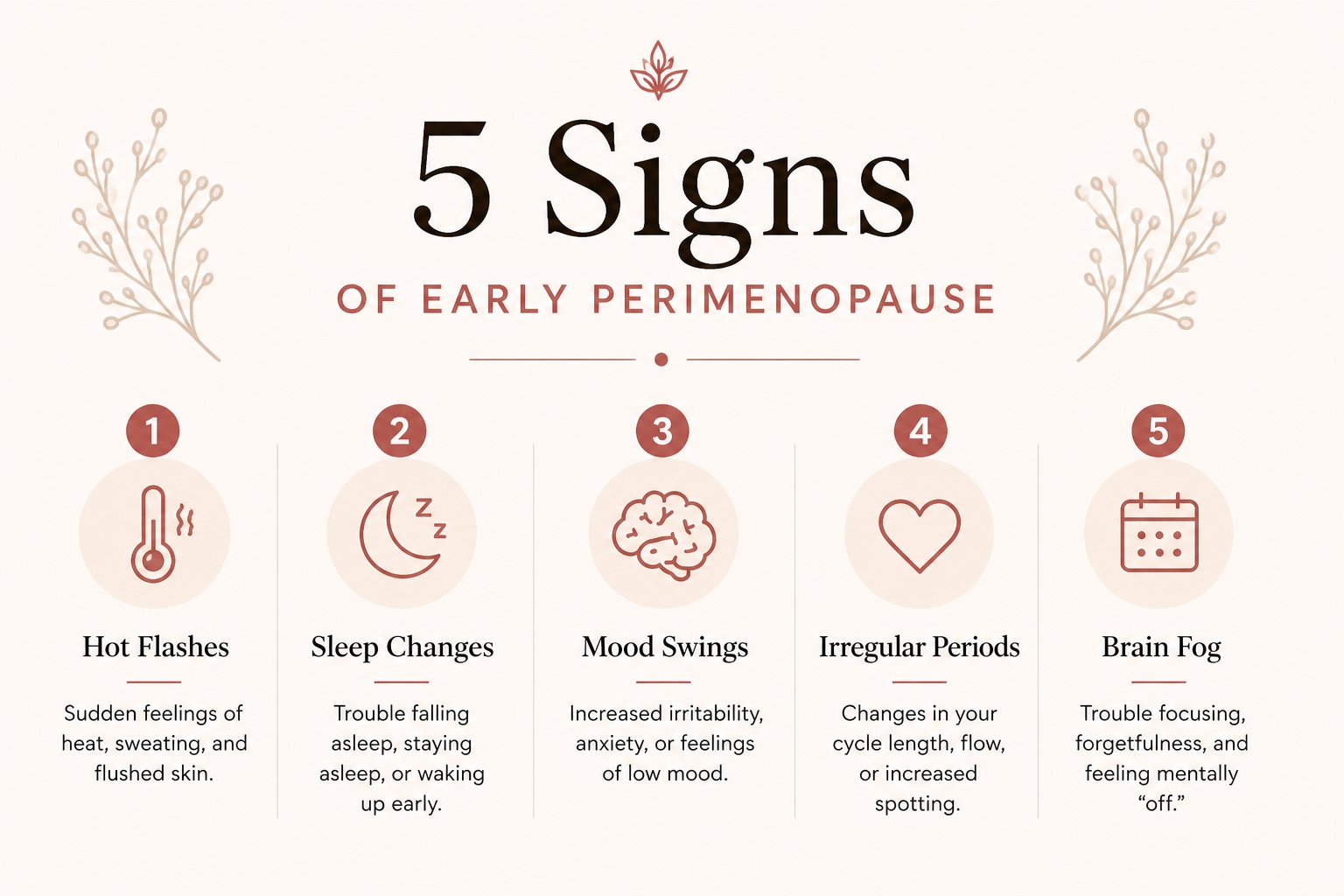
What to do next (the part most articles skip)
Most articles about perimenopause stop at the symptoms. That's not enough.
Here's what actually moves the needle:
Start tracking. Not because tracking is glamorous — it's boring. But the patterns are the answer. You can't tell what's hormonal vs. what's stress vs. what's something else without 30 days of data. A single doctor's visit can't see what a month of tracking can.
Bring data to your next appointment. Walking in and saying "I've been feeling off" gets you "your labs are fine." Walking in with 30 days of symptom patterns, frequency, and severity gets you a real conversation.
Don't accept "you're too young." If you're over 35 and recognizing yourself in three or more of these signs, perimenopause is on the table. Period.
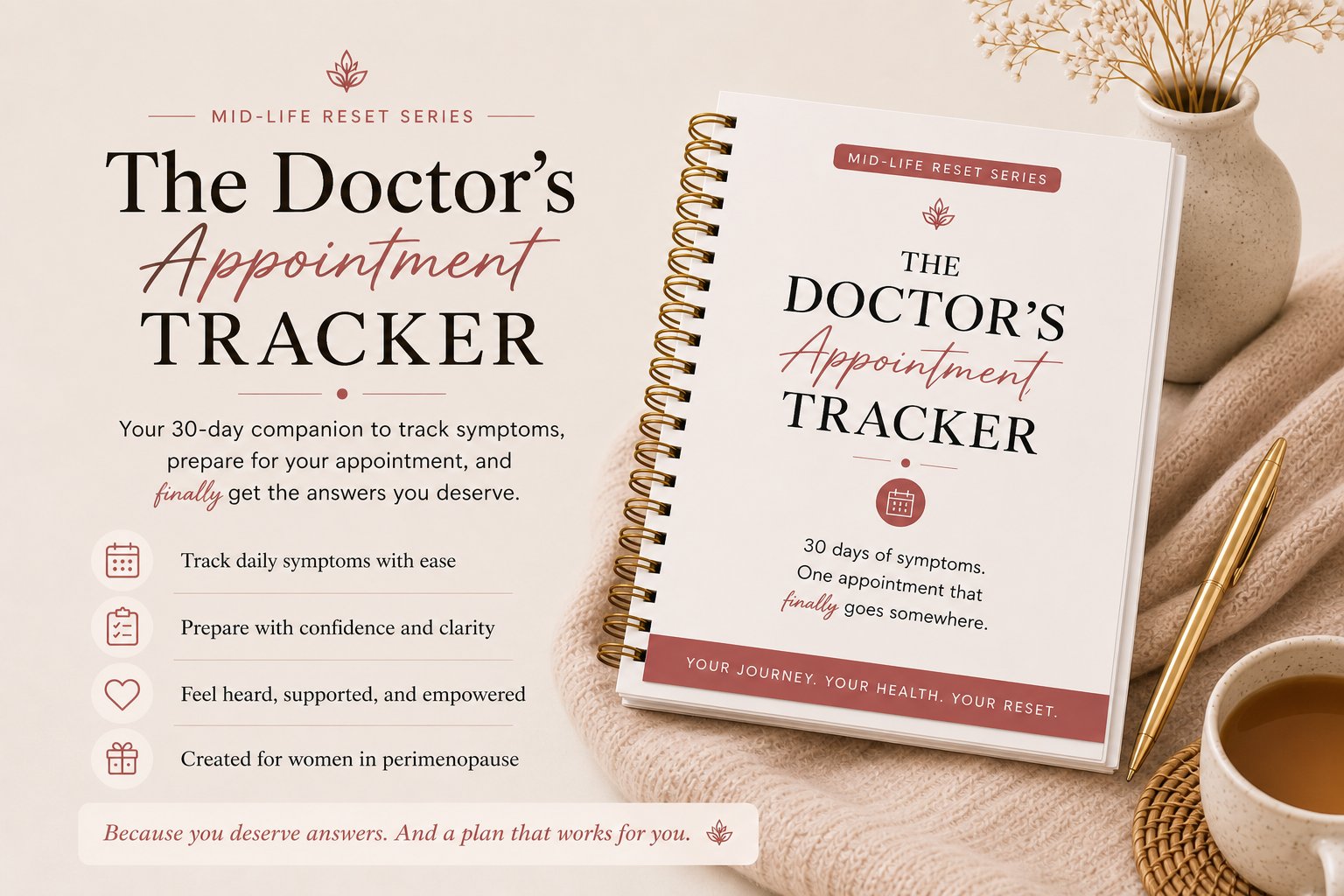
I built a tracker specifically for this — a 30-day daily log designed to be brought to a doctor's appointment, with a pattern-spotting guide and the exact questions to ask once you've tracked. It's called The Doctor's Appointment Tracker, and it's $29.
The Doctor's Appointment Tracker
30 days of symptoms. One appointment that finally goes somewhere. A printable + fillable PDF designed for women 40+ — daily log, shorthand key, pattern-spotting guide, and the question sheet to bring with you.
Take a Look at the Tracker →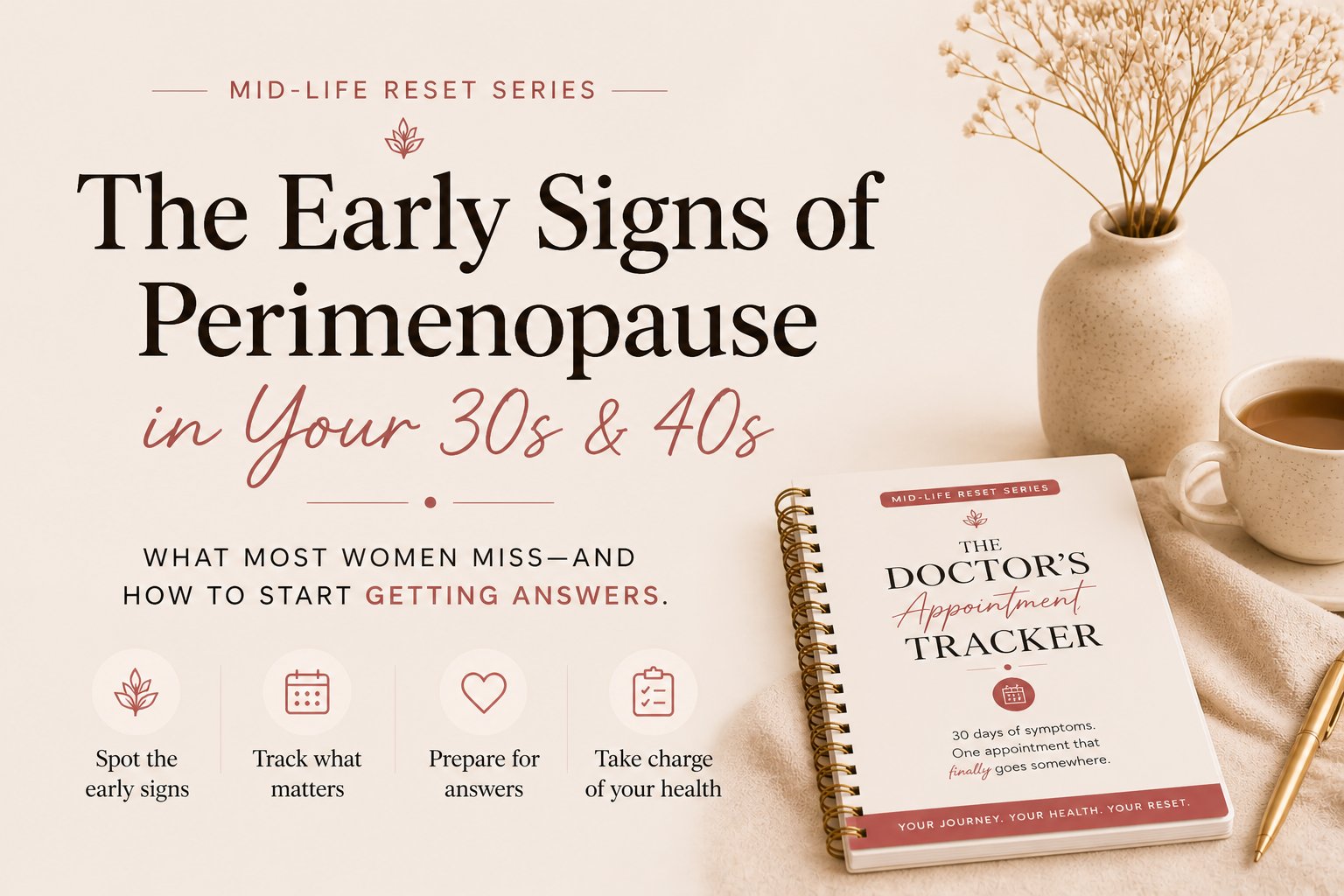
You don't need to do everything. You just need to start watching.
You're not too young. You're not crazy. You're paying attention. That's how this works now.
Read next: What to Track Before Your Next Doctor's Appointment (If You're a Woman Over 40) — how to turn 30 days of notes into the kind of data your doctor can't ignore.
Disclaimer: This post is for informational purposes only and isn't medical advice. Always work with a qualified healthcare provider for diagnosis and treatment.