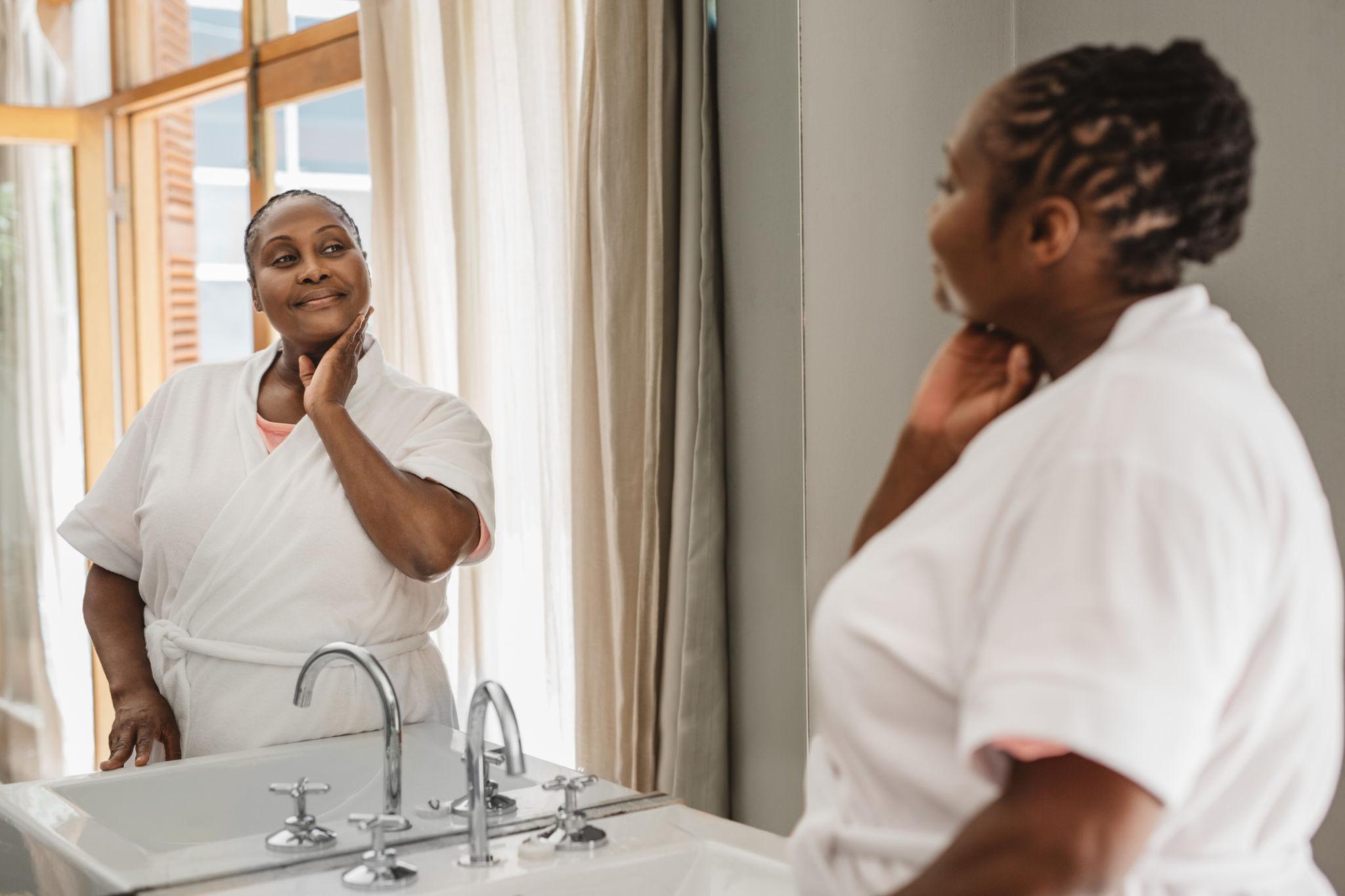
Somewhere between my 39th and 41st birthday, my body started doing things I didn't recognize. Sleep that used to come easy suddenly didn't. My skin shifted. My moods came in waves I couldn't explain. And the kicker — no one had prepared me for any of it. Not my mom. Not a routine appointment. Not the wellness content flooding my feed. So a year in, here's what I genuinely wish someone had sat me down and told me.
First, a small note: I'm not a doctor. I'm a 41-year-old woman sharing her own experience. If something here resonates, the next step is always a conversation with a provider who knows your history. But sometimes hearing another woman say "yeah, this is a thing" is the permission slip you didn't know you needed.
Nobody told me it could start this early
For most of my life, I assumed "menopause stuff" was a conversation for my 50s. What I didn't realize is that perimenopause — the transition leading up to it — can start a decade before actual menopause. For many women, that means symptoms can show up in the mid-to-late 30s and quietly intensify through the early 40s. By the time you're wondering "is this normal?" you're often already well into it.
The frustrating part is how easy it is to dismiss. A bad night of sleep. A random anxious week. A cycle that's slightly off. Individually, these things are easy to write off as "just stress" or "just being tired." Together, they can be a pattern worth paying attention to.
Curious if your symptoms are connected to perimenopause?
I made a free 3-minute guide called "5 Signs Your Hormones Are Out of Balance After 40" — read it, see if any of it fits.
Get the Free Guide →The symptoms that don't get talked about
When most people think of perimenopause, they picture hot flashes. And yes, those are part of it for some women. But the list is much longer, and a lot of it is less obvious. Some of what showed up for me — and what I've since heard from so many other women in this season:
- Sleep disruption — falling asleep fine but waking at 3am, mind racing
- Anxiety that feels new — a low hum of "something's off" even when nothing is
- Cycle changes — shorter, longer, heavier, lighter, or just less predictable
- Skin shifts — dryness, sensitivity, breakouts in places they never were before
- Brain fog — the "walked into a room and forgot why" feeling, but more often
- Joint aches — stiffness in the morning, soreness without a workout to blame
- Energy dips — a different kind of tired, the kind sleep doesn't quite fix
The list is longer than that, and every woman's experience is different. The point isn't to scare anyone — it's to say: if you've been feeling a little off and can't put your finger on it, you're not imagining things.
The thing that changed everything for me wasn't a new product or a perfect routine. It was finally tracking what I was feeling and seeing the patterns I couldn't see in the moment.
What actually made a difference for me
I'll be honest — I tried a lot of things. Some helped. Most didn't. Here's what stuck:
1. Tracking, daily
I started writing down small daily notes — how I slept, where my energy was, how my mood felt, any physical symptoms. Within a month, patterns I couldn't see in the moment became obvious on paper. It didn't fix anything on its own, but it gave me information, and information is the first step to actually doing something useful about any of it.
The Doctor's Appointment Tracker for Women 40+
I built the exact tracker I was using into a printable + fillable PDF so other women wouldn't have to start from scratch. Simple daily log, no overwhelm.
Shop the Tracker →2. Small, consistent habits — not overhauls
The temptation when you feel off is to blow up your routine and start over. Don't. The things that actually moved the needle for me were unglamorous: protein at breakfast, a hard bedtime I mostly keep, a walk outside most days, cutting back on wine on weeknights. Boring. Effective. Sustainable.
3. Getting actual support
The single most important thing I did was find a provider who takes women's midlife health seriously. Not every doctor does, and if yours is dismissing what you're telling them, it is okay — it is right — to find someone else. I also leaned into community. Finding other women in this season to be honest with has been its own kind of medicine.
What I'd say to past-me
If I could go back and hand 39-year-old me one piece of advice, it would be this: you're not broken. You're not overreacting. And this doesn't have to be something you just power through alone. This season of life is real, it's common, and it's a lot more manageable when you stop gaslighting yourself about it.
Whatever's showing up for you right now — the sleep, the mood, the body doing unfamiliar things — you are not the only one. And there is so much more help available than even five years ago. Start small. Start with tracking. Start with one honest conversation. The rest builds from there.